Anatomy of a Racing Drone: Frame, Motors & ESCs Explained
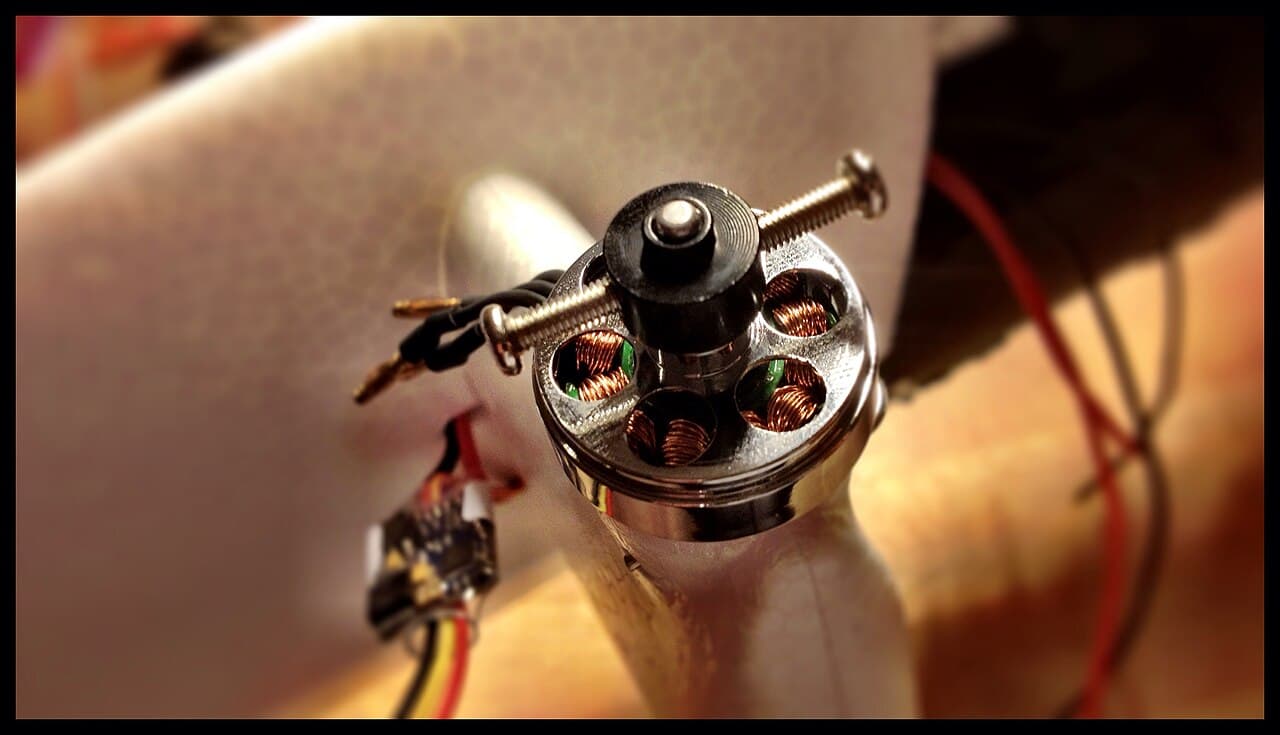
Look at a racing drone up close and it can seem like a chaotic tangle of wires, but every component on the frame exists to solve one specific problem, and understanding what each part does makes the whole machine far less mysterious. Starting from the outside in: the frame is the skeleton that holds everything together, almost always carbon fibre for its combination of light weight and stiffness. Frame size is measured by the diagonal motor-to-motor distance and roughly determines propeller size — a 5-inch frame is the current sweet spot for freestyle and racing, balancing agility against the raw power needed for fast, punchy flight.
Motors sit at each arm of the frame and are almost universally brushless on any serious build, described by a four-digit number like 2306 that encodes the stator's diameter and height in millimetres — a taller, wider stator generally means more torque and power at the cost of some efficiency. Paired with each motor is an electronic speed controller, or ESC, whose job is to translate the flight controller's digital command into the precise, rapidly alternating current a brushless motor needs to spin. Modern builds usually combine all four ESCs into a single 'four-in-one' board, simplifying wiring considerably compared to the four separate ESCs older builds required.
The flight controller is the brain, discussed in more depth elsewhere, but it's worth noting here how it physically fits into the stack: most modern builds mount the flight controller and the four-in-one ESC together as a compact 'stack', connected by a short run of wires or even soldered directly board-to-board, minimising both weight and the electrical noise that longer wire runs can introduce. Sitting above or below this stack is usually a video transmitter, which sends the live camera feed to the pilot's goggles, and an FPV camera itself, mounted at the front of the frame at a fixed or adjustable angle depending on how aggressively the pilot wants to fly.
Propellers are the final link in the chain, and they matter more than their low price tag suggests. Prop pitch and blade count change how a drone feels in a fundamental way — more blades generally mean smoother, more controlled power delivery at the cost of some top-end efficiency, while fewer blades tend to feel snappier and more efficient but slightly less locked-in during aggressive manoeuvres. Because propellers are also the most disposable part of any build, hitting the ground first in nearly every crash, most pilots carry a dozen or more spares in their field bag rather than risk ending a flying session over a single broken blade.
Powering the entire stack is the LiPo battery, mounted on top of or underneath the frame and secured with a strap, chosen to balance flight time against weight in a trade-off every pilot tunes to their own preference. Seen this way, a racing drone stops looking like an intimidating tangle of parts and starts looking like exactly what it is: a small, purpose-built system where every single component was chosen to solve one specific mechanical or electrical problem, with almost no wasted weight or unnecessary complexity anywhere in the build.
Written by Shruti Gupta
Keep Reading
 Racing
The Rise of FPV Drone Racing in India
From garage hobby to televised sport — how first-person-view racing found a home in Indian cities and college campuses.
 Buying Guide
Choosing Your First Beginner Drone: A Complete Buying Guide
Camera drone, mini whoop, or a ready-to-fly kit? A practical framework for picking a first drone without wasting money on the wrong one.
 Tech
TechUnderstanding Flight Controllers: PID Tuning Basics Explained
What a flight controller actually does, and why three letters — P, I, and D — decide whether your drone flies smooth or oscillates itself out of the sky.