Drone Swarm Technology Explained: How Hundreds Fly as One
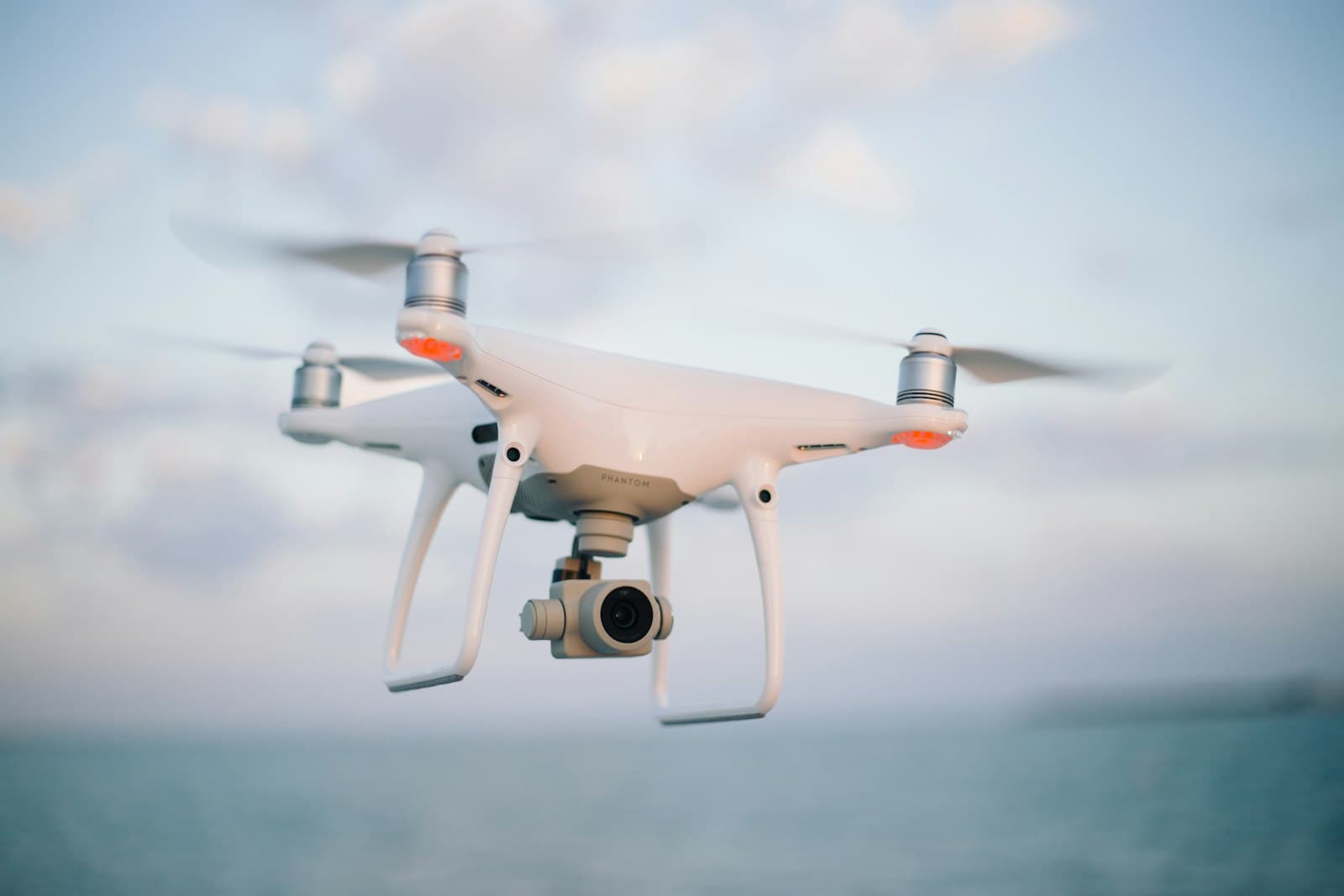
Watch a drone light show fill the night sky with a few hundred perfectly synchronised points of light forming a moving image, and the instinctive assumption is that some central computer is choreographing every single drone in real time, like a puppeteer with hundreds of strings. In reality, most large-scale drone swarms work almost the opposite way: each drone is largely autonomous, flying a pre-planned path calculated in advance, with the 'swarm' behaviour emerging from careful choreography rather than live centralised control of every unit simultaneously.
That distinction matters because it explains why swarm technology has scaled as fast as it has. Rather than requiring a single powerful system to track and command every drone's position in real time — an approach that becomes exponentially harder as the swarm grows — most commercial swarm platforms plan the entire show as a single piece of animation software beforehand, converting a 3D image or moving pattern into individual flight paths for every drone, each of which is then uploaded to that drone before takeoff. GPS and onboard timing keep each unit synchronised to the plan during flight, with only lightweight communication needed between drones to handle collision avoidance and safety fallback, rather than constant position updates for the entire swarm.
True swarm intelligence — the kind used in research and increasingly in search-and-rescue or agricultural applications — works differently and is arguably more interesting. Rather than following a pre-planned path, these systems use decentralised algorithms where each drone makes decisions based only on the position and status of its immediate neighbours, similar in concept to how a flock of birds or a school of fish moves without any single leader directing the group. A search-and-rescue swarm built this way can spread out to cover an area efficiently, dynamically adjust coverage if one unit finds something of interest or another drops out due to low battery, and converge on a target automatically — all without a human operator issuing commands to individual units in real time.
The communication layer underneath all of this is what makes leaderless coordination possible at all. Drones in a true swarm continuously broadcast a small amount of state information to nearby units — position, battery level, whether they've detected something relevant — and each drone runs the same simple decision-making algorithm on that shared information, arriving independently at coordinated behaviour the same way every bird in a flock follows the same basic rules of staying close to neighbours while avoiding collision. This decentralisation is also what makes swarms resilient in a way that centrally-controlled systems aren't: losing several units from a hundred-drone swarm barely affects overall performance, whereas losing the single central controller in a centralised system can be catastrophic.
The near-term applications growing fastest today lean toward exactly the areas where this resilience and coverage advantage matters most — large-area search and rescue, agricultural field monitoring across large farms, and infrastructure inspection across long pipelines or power lines, where covering a large area quickly and adapting to unexpected findings genuinely outweighs the spectacle value that light shows are best known for. As the underlying coordination algorithms keep improving, swarm technology is steadily moving from an impressive visual demonstration toward a genuinely practical tool for exactly the large-area, time-sensitive problems that a single drone was never well suited to solving alone.
Written by Harshit Raj
Keep Reading
 Racing
The Rise of FPV Drone Racing in India
From garage hobby to televised sport — how first-person-view racing found a home in Indian cities and college campuses.
 Buying Guide
Choosing Your First Beginner Drone: A Complete Buying Guide
Camera drone, mini whoop, or a ready-to-fly kit? A practical framework for picking a first drone without wasting money on the wrong one.
 Tech
TechUnderstanding Flight Controllers: PID Tuning Basics Explained
What a flight controller actually does, and why three letters — P, I, and D — decide whether your drone flies smooth or oscillates itself out of the sky.